Ask anyone touring land in Silver Creek Estates what they are giving up by not buying into Glenwild or Promontory, and the answer is usually a shrug. No clubhouse. No golf minimums. No HOA committee reviewing barn plans. That absence has been the entire point for two decades: buyers choose Silver Creek because eight-acre lots, working horse property, and a voluntary HOA are worth more to them than a heated pool and a dining room with a dress code.
This summer, that math got more complicated. Basin Recreation, the special district that runs Snyderville Basin's parks and fieldhouse, spent June and July building a case for a $150 million bond that would put a 120,000-square-foot aquatics and recreation center on district-owned land in Silver Creek Village. Then, on August 7, the district told the Summit County Council it was going back to the drawing board after residents and councilmembers pushed back on the price tag. For anyone weighing Silver Creek's land-for-amenities trade against a golf community membership right now, the timing matters more than the square footage.
The trade Silver Creek buyers have always understood
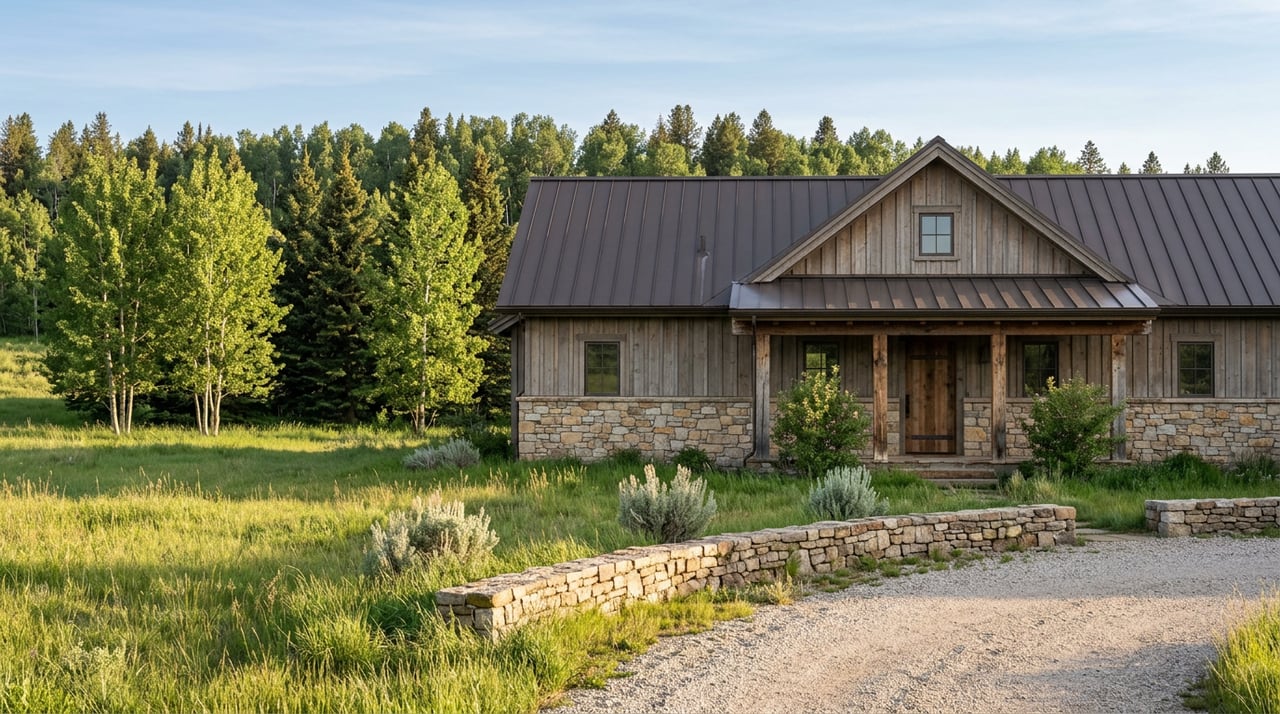
Silver Creek Estates sits north of the I-80 and Highway 40 interchange, a horse-friendly stretch of unpaved roads and open sky bordering two of the area's best-known private golf communities. Homesites here typically run from about 2.5 acres up to 10 acres or more, with some ranch parcels reaching well beyond that. Roads in the core neighborhood are intentionally left ungraded in places so residents can ride horses through the streets, and there is no mandatory architectural review governing paint colors or garage doors.
That combination has always meant something specific: buyers here are optimizing for space and self-determination, not for a shared amenity package. If someone wanted a pool, a fitness room, or a golf pro shop, they looked west to Glenwild or southeast to Promontory, gated communities built around clubhouse life and course access. Silver Creek's appeal was that none of that came with the price of admission, just a ten-minute drive to Kimball Junction and a fifteen-minute drive to ski terrain.
What showed up on the agenda in June
That is the backdrop for Basin Recreation's mid-June announcement that it intended to pursue a general obligation bond for the November ballot, funding two new fieldhouses: one on the county-owned Cline Dahle parcel near Jeremy Ranch, and one on district-owned land in Silver Creek Village. Executive Director Robert Parrish told the Summit County Council the district needs to keep pace with development already moving through the county review process, including the Altus Park City project, with the existing Fieldhouse in Kimball Junction projected to hit capacity in 2027.
The growth numbers behind that projection are specific. Basin Recreation's service population is expected to grow from 25,597 residents in 2026 to 30,709 by 2036, a roughly 20 percent increase over the decade, driven partly by Silver Creek Village's own buildout along with the Tech Center redevelopment and Junction Commons. Community feedback sessions pushed the Silver Creek Village facility from an initial 76,000 square feet up to 120,000 square feet, larger than the current 84,000-square-foot Fieldhouse, with a lap pool, a recreation pool, an indoor turf field, and space for youth programs and childcare.
"We're at the point where we're making a decision; we're moving forward."
That was Parrish's framing in June. By mid-July, the number attached to that decision was $150 million.
The tax mechanic behind the number
The bond's cost structure is worth understanding on its own terms, because it is not a flat fee. Basin Recreation's July staff report laid out annual costs by home value:
| Home Value | Estimated Annual Bond Cost |
|---|---|
| $400,000 | $118 |
| $700,000 | $207 |
| $1,000,000 | $295 |
| $1,500,000 | $443 |
The mechanism underneath that table matters more than the table itself. The bond payment is fixed, but the tax base it is split across is not. As new homes and businesses in the district come online, they join the tax rolls and start covering a share of that same fixed payment, which means existing owners' portion is designed to shrink as the Basin grows rather than stay flat for twenty years.
That is a genuinely different structure than an HOA due that only climbs. It also means the earliest years after a bond passes, before new construction catches up, are when current owners carry the largest relative share of the cost.
Then the plan got smaller
None of that math is settled. On August 7, Basin Recreation told the County Council it is redrafting the bond after residents and councilmembers questioned the need for certain amenities and raised concerns about the growing price tag. The specifics of a smaller version have not been finalized. What is confirmed is that a facility, if a bond eventually passes and construction proceeds on schedule, would not open before 2029.
For a Silver Creek buyer, that is the operative fact right now. The rec center is not a settled amenity that can be priced into a purchase the way a finished golf course can. It is a multi-year civic process that has already changed shape once and may change again before it reaches a ballot.
What this means for the acreage-versus-amenity math
Here is the part worth sitting with. Silver Creek's value proposition was never really about the absence of amenities. It was about buyers who wanted to control that trade-off themselves rather than pay dues for a package they might not use. A public aquatics center with childcare and camp programming, funded through a district-wide tax rather than a private membership, does not erase that logic. It adds a variable that behaves differently: no application, no membership cap, but also no guarantee of when or whether it arrives in the form residents were shown in July.
Buyers comparing Silver Creek to Glenwild or Promontory right now should treat the pending bond as exactly that, pending, and make the acreage decision on the terms that have held for twenty years: lot size, water and septic infrastructure, proximity to the interstate, and freedom from architectural review. If the facility eventually opens, it will be a genuine addition to daily life in the district. If the timeline slips again, the land underneath it will still be the reason people bought here in the first place.
A few things are worth confirming before treating any version of this project as settled:
- Whether the redrafted bond, once finalized, still includes a Silver Creek Village site or shifts scope elsewhere
- The current assessed value used for any property under consideration, since the tax table scales with home value rather than lot size
- Which sub-community a given listing actually sits in. Silver Creek Estates covers several distinct pockets, including East Creek Ranch's smaller, fenced half-acre lots, the larger acreage tier in The Preserve and Goshawk, and the more remote parcels in Stagecoach Estates and Tollgate Canyon, each with its own access roads and drive times
- Whether the property already carries a voluntary HOA membership, since that affects nothing about the bond but everything about architectural flexibility
FAQ
Does the proposed bond affect property taxes I already pay, or only if it passes? The tax table Basin Recreation published only applies if voters approve the bond, expected on the November ballot pending County Council authorization. Nothing changes for current owners unless and until that vote happens.
Is the Silver Creek Village site guaranteed even if a smaller bond passes? Not as of early August 2026. The district is still redrafting scope after community pushback, and a finalized site list has not been confirmed.
How does Silver Creek's amenity gap compare to gated communities nearby? Communities like Glenwild and Promontory are built around private clubhouse and golf access funded by membership dues. Silver Creek's model has always relied on acreage and a voluntary HOA instead, which is why any public facility funded through property tax represents a structurally different kind of amenity, not a replacement for club membership.
Buyers who choose Silver Creek are usually choosing it on purpose, not settling for it. Understanding exactly what is and is not locked in about the district's recreation plans is part of making that choice with clear eyes. If you are comparing acreage in Silver Creek against a membership at Glenwild or Promontory, or want a read on how a specific parcel's assessed value would factor into the bond math, Stein Eriksen Realty Group can walk through the current listings and the open questions side by side.