If you follow Deer Valley real estate, the terrain expansion is more than a mountain story. It is an access story, a product story, and, for many buyers and sellers, a pricing story. If you are trying to understand what this means for property values, competition, and day-to-day ownership in Park City, this guide will help you see where the biggest shifts may happen and why. Let’s dive in.
Why Deer Valley’s expansion matters
Deer Valley’s Expanded Excellence plan is a resort-wide rebuild, not a simple lift upgrade. Deer Valley’s planning materials describe a multi-phase project that includes more than doubling skiable terrain, adding Deer Valley East Village, upgrading infrastructure, and reworking the Snow Park base area.
The scale is significant. The original 2023 announcement called for 3,700 acres of new skiable terrain, 16 new chairlifts, and a 10-passenger gondola, with a long-range total of 5,726 acres, 37 chairlifts, and 238 runs when complete. Current Deer Valley materials say the resort now features about 4,300 skiable acres and 31 chairlifts.
For real estate, that kind of expansion can change how buyers compare locations. It can also reshape which homes feel most convenient, which properties face fresh competition, and which neighborhoods benefit most from new resort infrastructure.
Access is the main value driver
In resort real estate, ease of use matters. A home that feels simpler to reach, easier to ski from, or more seamless for guests can become more appealing to both current owners and future buyers.
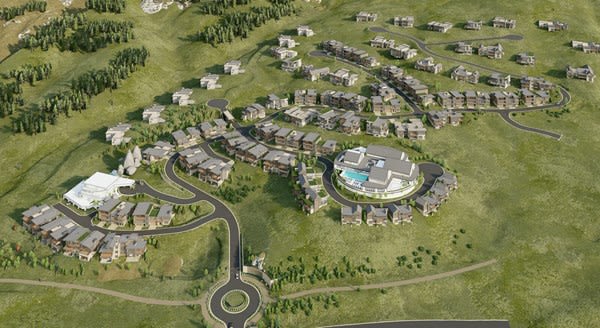
That is why Deer Valley East Village matters so much. Deer Valley says this new base village on U.S. Route 40 is designed as an alternate arrival route, includes 1,200 day-skier parking spaces, and is intended to ease traffic through Park City.
Snow Park is part of that same access story. Deer Valley’s filings and Park City planning records show a reworked base area with new circulation, a parking structure, and a transit and mobility hub. Over time, those upgrades could improve how owners and visitors move through the resort.
For buyers, the takeaway is simple: access geometry may matter more than a neighborhood label. The practical route from your front door to parking, lifts, or the new gondola may shape your experience just as much as the address itself.
New inventory changes the competitive set
Expansion also adds product. Deer Valley East Village is planned to include more than 800 hotel rooms, nearly 1,700 residential units, 250,000 square feet of retail and commercial space, and 68,000 square feet for recreation. Grand Hyatt Deer Valley opened in late 2024 with 387 guestrooms, 40 suites, and 55 private residences.
That new supply can broaden the buyer pool, but it can also create pressure on older nearby inventory. This matters in a market where the Park City Board of Realtors reported that 2025 buyers were gravitating toward newer housing stock, better access, and more contemporary design, while often staying price-sensitive.
In other words, the expansion does not automatically lift every property in the same way. Newer and more turn-key homes may benefit from current demand patterns, while older condos or homes may need stronger pricing discipline and sharper positioning.
East Village and Jordanelle are direct beneficiaries
If one area stands out as the clearest winner from the expansion, it is the East Village and broader Jordanelle corridor. This is the new eastern portal to Deer Valley and the area most directly connected to the new terrain and lift network.
The market data already points to rising interest. The Park City Board of Realtors reported that 2025 single-family sales in the Jordanelle area increased to 110, up 25% year over year, while dollar volume rose 45%. The median sale price also moved above $4 million for the first time.
Condo pricing in the area shows a wide spread, which suggests a growing range of entry points and product types. In 2025, the board reported Mayflower Lakeside averaging $1.5 million, while Pioche Village averaged $587,000.
For buyers, this area may appeal if you want newer product, easier drive-in access, and a base-village environment that continues to build out. For sellers, it means your property may be entering a more competitive but also more closely watched submarket.
Governance matters in East Village
One detail buyers should not overlook is that Deer Valley East is not governed exactly like older Deer Valley neighborhoods in Park City. Wasatch County says the area falls within the Jordanelle Basin resort-planning framework, where the Jordanelle Specially Planned Area is the primary land-use authority and MIDA has land-use authority over part of the project area.
That means development context, timing, and planning structure can differ from neighborhoods within Park City municipal limits. If you are comparing properties on the east side versus classic Deer Valley locations, this is more than a map issue. It can affect how you evaluate the area’s future buildout and overall ownership experience.
Snow Park and Lower Deer Valley face a split story
Snow Park and Lower Deer Valley may have the most mixed near-term picture. Long term, these areas should benefit from major base-area improvements, including the planned parking structure, transit hub, and skier-traffic rerouting.
Near term, they also carry the most direct exposure to construction, changing circulation, and shifts in views or activity patterns. That can create inconvenience for some owners even while the long-run case for usability improves.
The market appears to be looking past some of that disruption. The Park City Board of Realtors reported 54 sales in Lower Deer Valley in 2025, up 69% year over year, with dollar volume up 121% to $169 million.
For sellers in this area, the opportunity may be strong, but presentation and buyer education matter. For buyers, it is worth weighing short-term disruption against the possibility of better long-term access and a more efficient base experience.
Upper Deer Valley and Deer Crest keep their scarcity edge
Not every Deer Valley neighborhood is driven by the expansion in the same way. Upper Deer Valley, Deer Crest, and other upper-mountain locations should still trade primarily on scarcity, views, and direct ski access.
That is important because new terrain does not replace established ski-in/ski-out inventory in legacy locations. It may reinforce Deer Valley’s overall prestige, but it does not erase the premium attached to rare upper-mountain ownership.
The 2025 market data supports that view. The Park City Board of Realtors reported that Upper Deer Valley’s median price reached $4.9 million on 22 homes sold, nearly double the prior year.
For buyers, this suggests that classic upper-mountain properties may remain in a category of their own. For sellers, it reinforces the value of a pricing strategy built around true scarcity rather than broad market headlines.
The market is getting more segmented
One of the clearest effects of the expansion is not that everything rises together. It is that the market becomes more segmented.
The Park City Board of Realtors said local sales reached $5.75 billion in 2025, the second-highest total on record. At the same time, the report emphasized that performance varies sharply by property age, amenities, location, and property type.
That distinction matters in Deer Valley. A ski-in/ski-out residence, a drive-to-resort condo near East Village, and a property near the evolving Snow Park base may all benefit from the expansion, but for different reasons and on different timelines.
This is why micro-market analysis matters so much right now. Two homes with similar square footage can have very different outlooks if one sits near new infrastructure, one competes with incoming inventory, and one benefits from longstanding scarcity.
What buyers should evaluate now
If you are considering a purchase near Deer Valley, the expansion makes due diligence more specific. You are not just buying a home. You are buying into a changing access pattern, a defined competitive set, and a particular stage of development.
Focus on questions like these:
- How close is the property to Deer Valley East Village, Snow Park, or upper-mountain lift access in real day-to-day use?
- Is the home in Park City municipal limits or in the Wasatch County East Village area?
- Does the property’s age and finish level align with what current buyers are rewarding?
- If rental use matters to you, does the HOA allow the strategy you want, and how might new nearby supply affect competition?
- How much ongoing construction is expected around the property over the next several seasons?
These questions can help you compare homes more clearly, especially in a market where access, newness, and location are becoming more differentiated.
What sellers should keep in mind
If you own in Deer Valley or nearby, the expansion creates both opportunity and competition. In some areas, the new terrain and improved access may support stronger demand. In others, incoming inventory may raise the standard for design, condition, and amenities.
That makes positioning especially important. Buyers in today’s market are responding to contemporary finishes, easier ownership, and convenience. A well-located home with thoughtful updates may compete very differently than an older property that has not kept pace with changing expectations.
It also means timing matters. In a phased resort expansion, the story around your home can shift as lifts open, village amenities come online, and nearby construction progresses.
The bottom line for Park City real estate
Deer Valley’s terrain expansion is likely to increase the value of access, newness, and resort scale, but it is also making the market more nuanced. East Village and the Jordanelle corridor appear best positioned for direct demand from buyers seeking newer product and easier arrival patterns. Snow Park and Lower Deer Valley may see meaningful long-term convenience gains, even as redevelopment continues in stages. Established upper-mountain neighborhoods should remain premium assets because their scarcity is not being recreated by the new buildout.
In a market like Park City, broad headlines only tell part of the story. The real advantage comes from understanding how a specific property fits within Deer Valley’s changing map, timeline, and buyer demand.
If you are considering a purchase or sale in Deer Valley, Park City, or the surrounding Wasatch Back, Stein Eriksen Realty Group offers the local market knowledge and micro-market guidance to help you move with confidence.
FAQs
How does Deer Valley’s terrain expansion affect Park City real estate values?
- The expansion is most likely to influence value through better access, new inventory, and stronger market segmentation by location, property type, and condition.
What makes Deer Valley East Village important for buyers?
- Deer Valley East Village adds a new base area on U.S. Route 40 with lift access, parking, lodging, residences, and commercial space, making it a major new gateway into the resort.
How does Snow Park redevelopment affect Lower Deer Valley owners?
- Snow Park redevelopment may improve long-term convenience through new circulation, parking, and transit features, but nearby owners may also experience multi-season construction and traffic changes.
Why are Upper Deer Valley and Deer Crest still unique?
- These areas continue to stand out because of limited supply, views, and direct ski access, which are not fully replaced by new development elsewhere in Deer Valley.
What should buyers compare when looking at Deer Valley properties?
- Buyers should compare actual ski access, development stage, municipal versus county planning context, property condition, HOA rules, and nearby competing inventory.
What should sellers near Deer Valley focus on in this market?
- Sellers should focus on precise pricing, strong presentation, and clear positioning around access, condition, amenities, and how the home compares with newer nearby inventory.